You must travel far back in time to find a World Cup that began without a Ronaldo-centered suspense. There were two of them in 1994. Brazil, who went on to win the championship, called up a defender by that name as a late injury replacement. In addition, they selected Ronaldinho, a 17-year-old striker with a goofy grin known at the time as Ronaldinho.

Ronaldo would become a Ballon d'Or winner by the 1998 World Cup in France, when he led Brazil's offence until he experienced violent convulsions on the day of the final and was initially kept out of the lineup. Then, the ruling was reversed. Ronaldo "Fenomeno," as he was also known, played anonymously in Brazil's 3-0 loss to France, an experience he put behind him when, despite a lengthy injury layoff preceding the 2002 World Cup, he was the tournament's leading scorer in South Korea and Japan.
There is still significant debate, primarily from South America, regarding whether of the twogreat Ronaldos, both legends at Real Madrid, is the greatest, and the two World Cup gold medals won by Brazil's Ronaldo give him the edge over Portugal's. In 1994, Ronaldo was a non-playing substitute for Brazil, but eight years later he was the hero. By 2006, however, he would be completely eclipsed by his namesake, CR7, the greatest record-breaker of the 21st century.
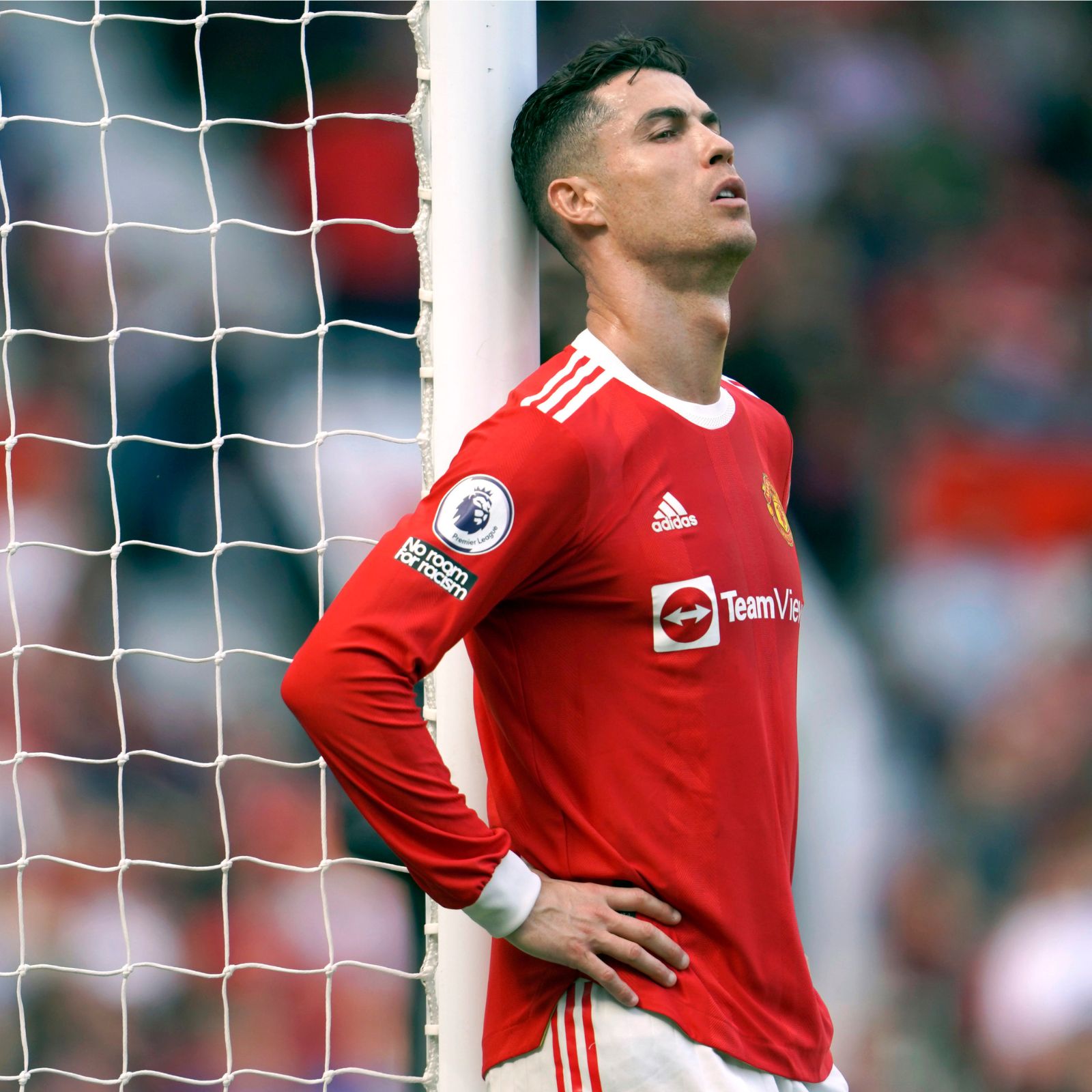
Ronaldo is as dissatisfied with his club role at Manchester United as he has ever been in the nearly two decades that he has planned his life around Portugal's international championships. It is a timeline that includes a losing final in one European Championship, in 2004, and a victory in that competition, in 2016, when he went off injured in the first half of the victory over France in Paris but was animated, almost as if he were Santos's co-manager, cheering on his teammates from the sidelines. It's an odyssey that brought him to his second World Cup, in South Africa in 2010, as the sport's most expensive player, courtesy to his move from Manchester United to Real Madrid. In the summer preceding his fourth World Cup, he was about to become the only player to have earned a second transfer fee of more than €100 million, the amount Juventus paid to get him from Real Madrid.
Contrast this with the well-documented disappointments Ronaldo experienced in the summer of 2022, when he made it clear he wanted to end his second stint at Manchester United and find a club that could give him with a Champions League platform. There were none available, nor any clubs that fit his perception of his own rank or met his financial requirements. For the first time in fifteen years, the superstar of Portugal's club is a replacement. He enters this week's Uefa Nations League matches having scored only one goal this season and none since April from open play for his team.
Cristiano Ronaldo's individual records
This Ronaldo will begin his fifth World Cup in November, and the question is: Will he be in form? Will he deserve his starting position for Portugal? It is logical to believe that his 38th birthday, which is three months away, will be his last. If he reaches the semi-finals, he will match his best performance on the sport's grandest stage; if he performs as courageously as the 21-year-old, dynamic CR7 did in Munich in that semi, a narrow loss to France, his country and a watching world will be reminded that this is a footballer who, if at times he appears to be the ultimate individualist, it is because he knows he can lift teams by himself.
And if Ronaldo begins the Qatar tournament with a performance similar to the one that ignited the 2018 World Cup, when he scored a hat-trick against Spain on the opening weekend, his Portugal head coach Fernando Santos will hardly need to stress that Ronaldo remains crucial to the national team. Santos made this statement ahead of this week's penultimate gathering of his squad before the tournament, for Uefa Nations League fixtures.
Santos adds, "I'm not concerned; I've been monitoring. I pay attention, along with him and the other players, to their performance, regardless of whether they are now playing or are scheduled to play.
In that case, he will be well ahead of Bruno Fernandes' leadership position and game-changing performances for United, the club where Ronaldo is not a regular starter. Santos will have taken note of the major clubs' pursuit of Bernardo Silva, the serial champion of Manchester City, or Joao Felix, the maturity prodigy of Atletico Madrid, Pedro Neto, of Wolverhampton Wanderers, and Rafael Leao, the Serie A's Most Valuable Player from last season for AC Milan.
Santos will be thrilled with Diogo Jota's return from injury and obvious contribution to Liverpool's offensive vigour. Even without Ronaldo, the team's all-time leading scorer and captain, Portugal can select a top-tier front five and rely on a wealth of brilliance in reserve. His current form and level of match-readiness are far inferior to those of his talented countrymen.
Comments
Post a Comment